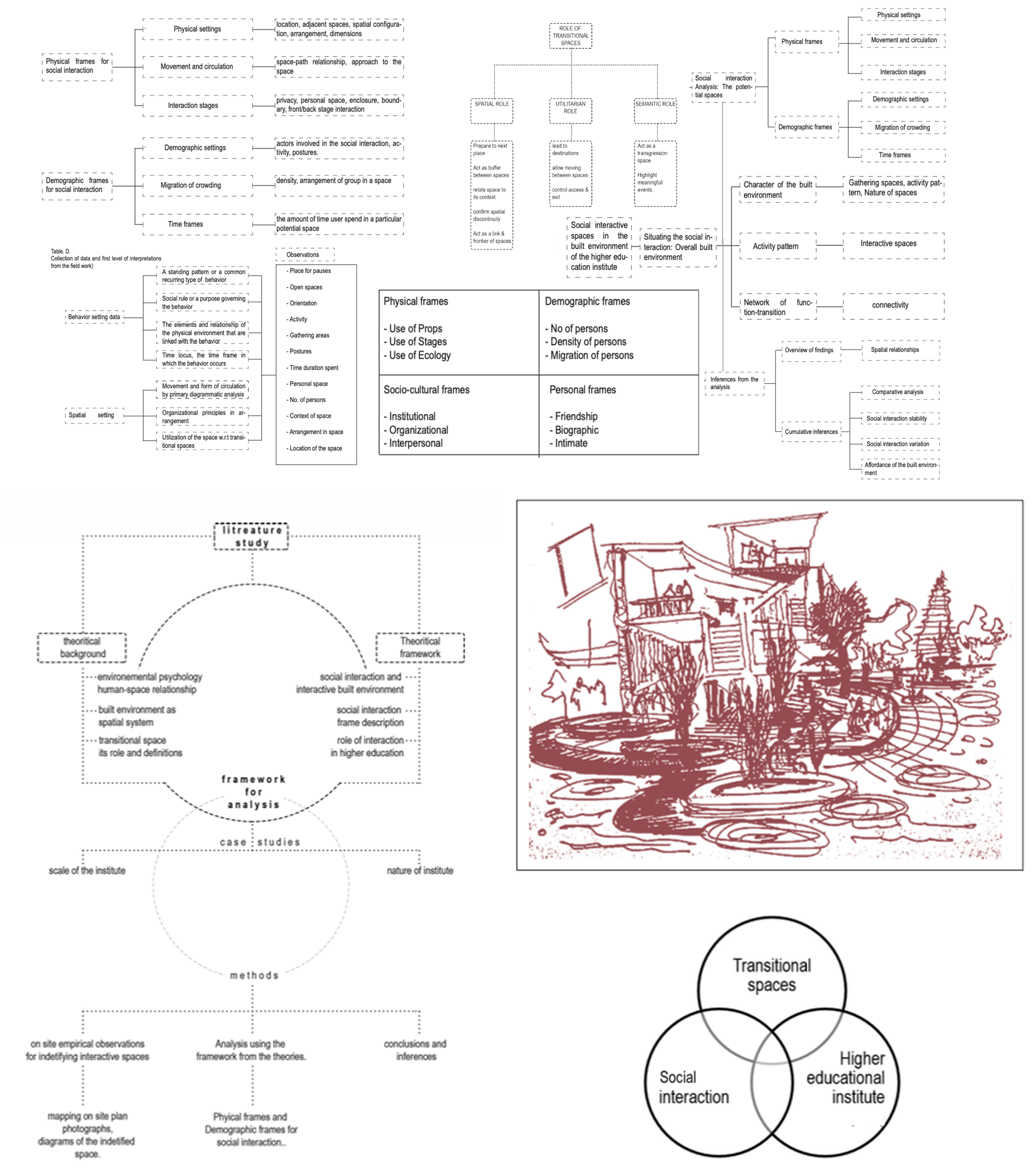
Methodology
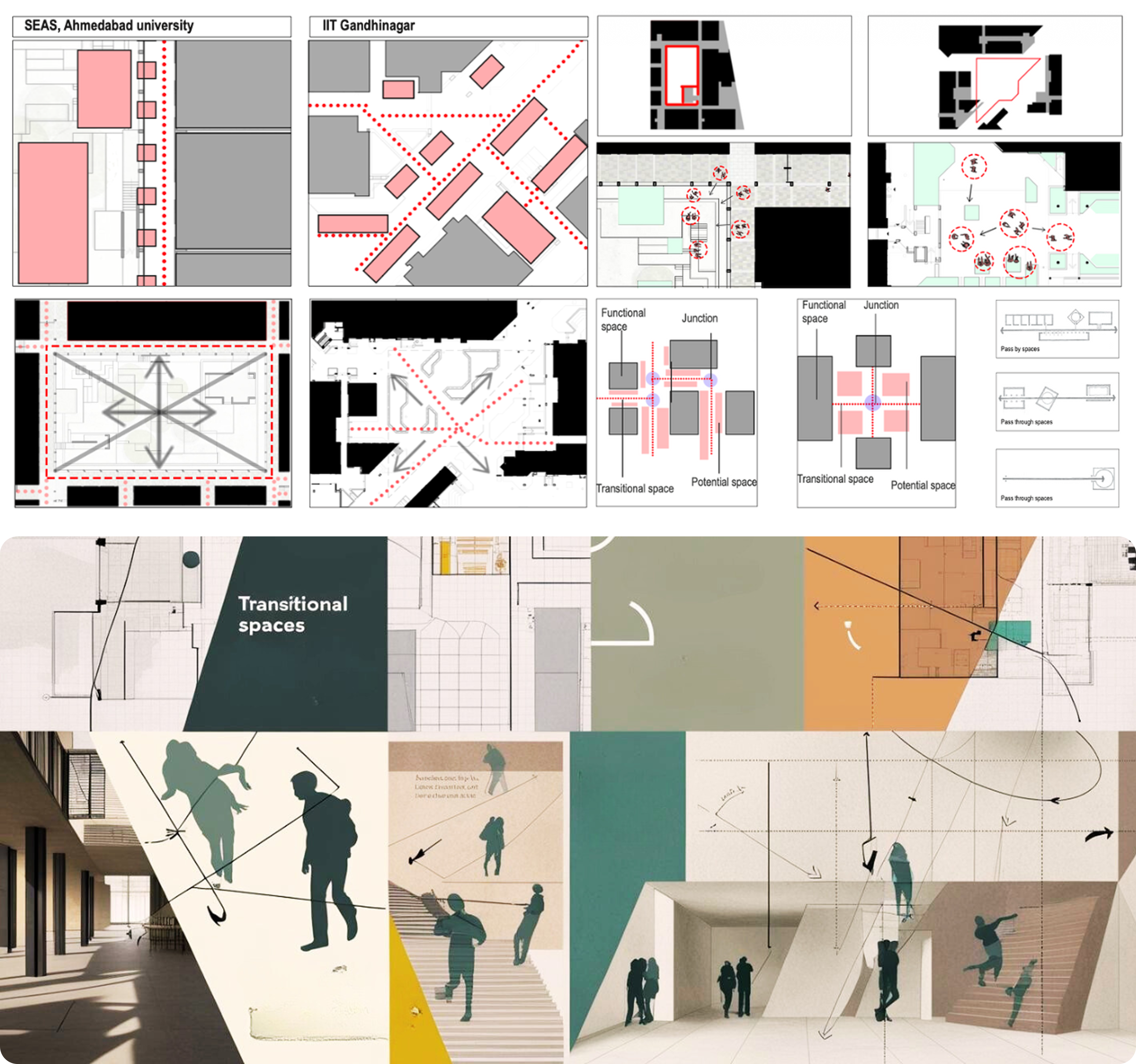
Transitional Spaces Matrix
Through empirical observation, photo-syntax sequencing, and a comparative matrix, the study reframed corridors, thresholds and courtyards as designed opportunities rather than leftovers. Findings informed design recommendations and pedagogic tools for campuses. The work culminated in a structured analytical matrix, documented case studies, and a published report proposing tangible design interventions across campuses.
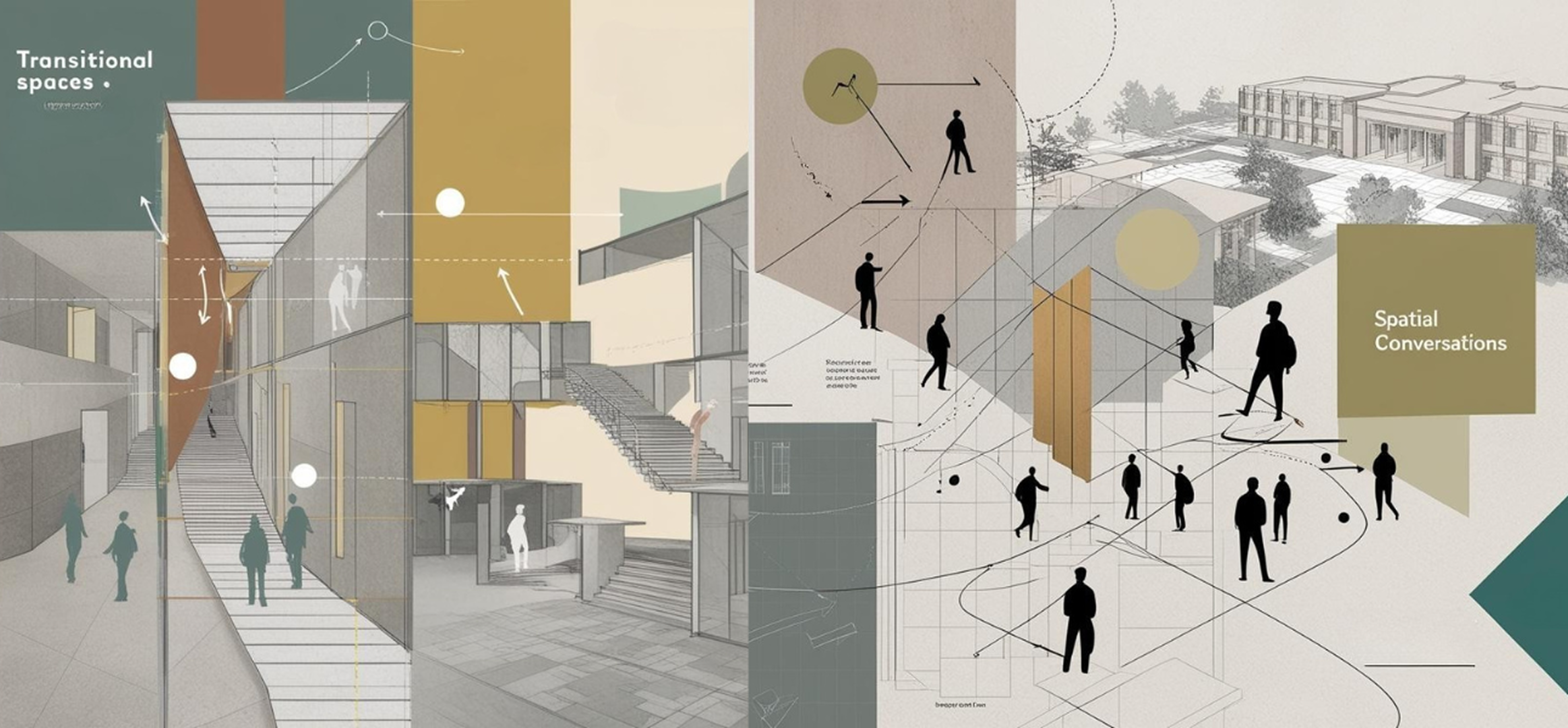
This thesis investigates how transitional spaces within campus architecture influence movement, interaction, and social behavior. The research positions these in-between spaces as active spatial systems rather than residual zones, shaping everyday experiences and informal encounters.

The proposal reframes corridors, courtyards, and thresholds as critical social infrastructures, questioning their architectural intent, performance, and impact on campus life.
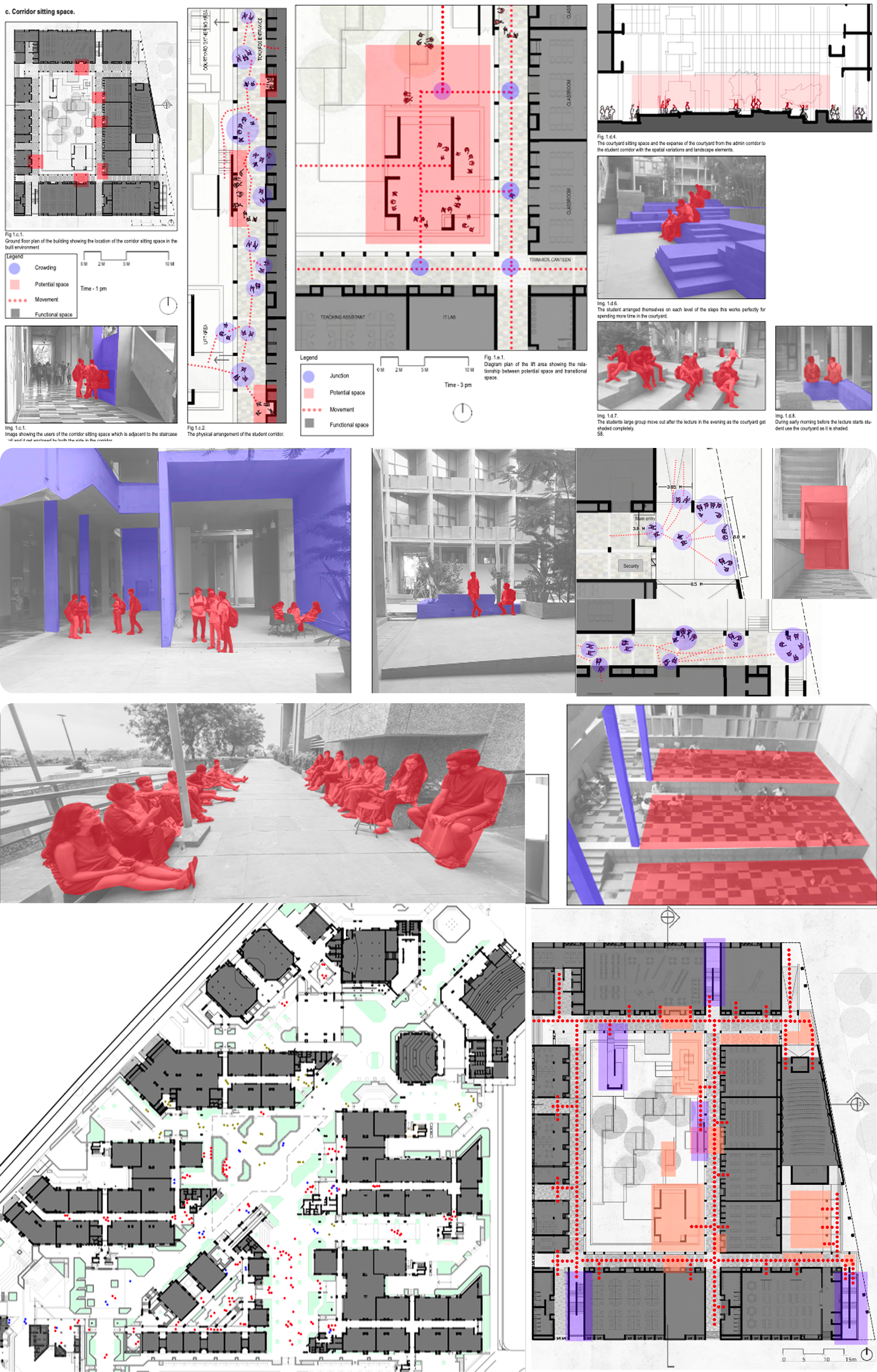
The research adopts a scientific and empirical framework, combining observational studies, spatial mapping, and photo syntax analysis. Real campus environments were documented to study behavioral patterns and the correlation between spatial configuration and social interaction.

Photographic sequencing and spatial analysis tools were used to objectively decode how users occupy, move through, and appropriate transitional spaces over time.
The Transitional Spaces Matrix was developed as an analytical tool to classify and compare spatial conditions across campuses. It maps variables such as scale, permeability, activity intensity, and duration of use.

This matrix translates qualitative observations into a structured design reference, enabling architects to consciously design transitional spaces that encourage interaction and social continuity.