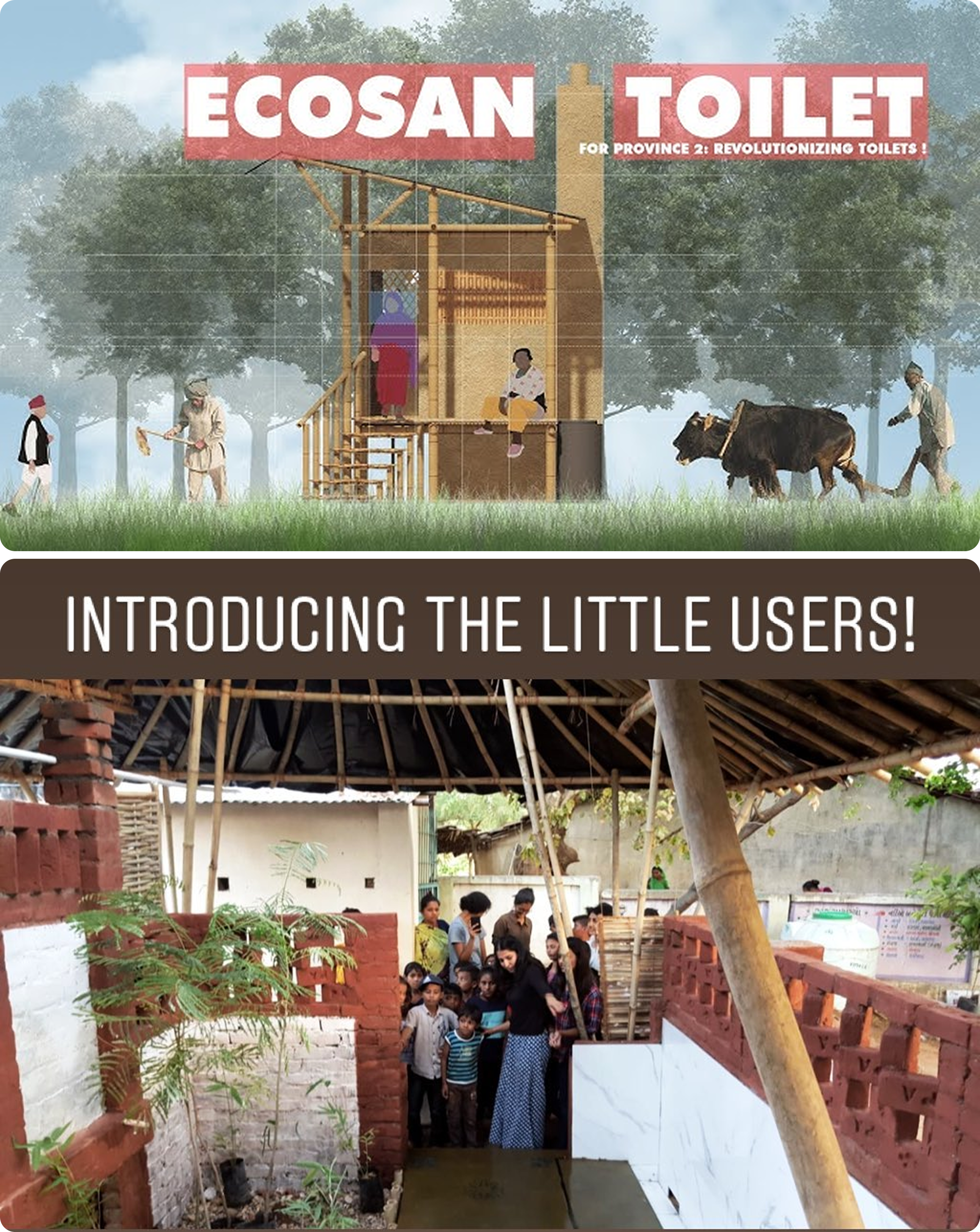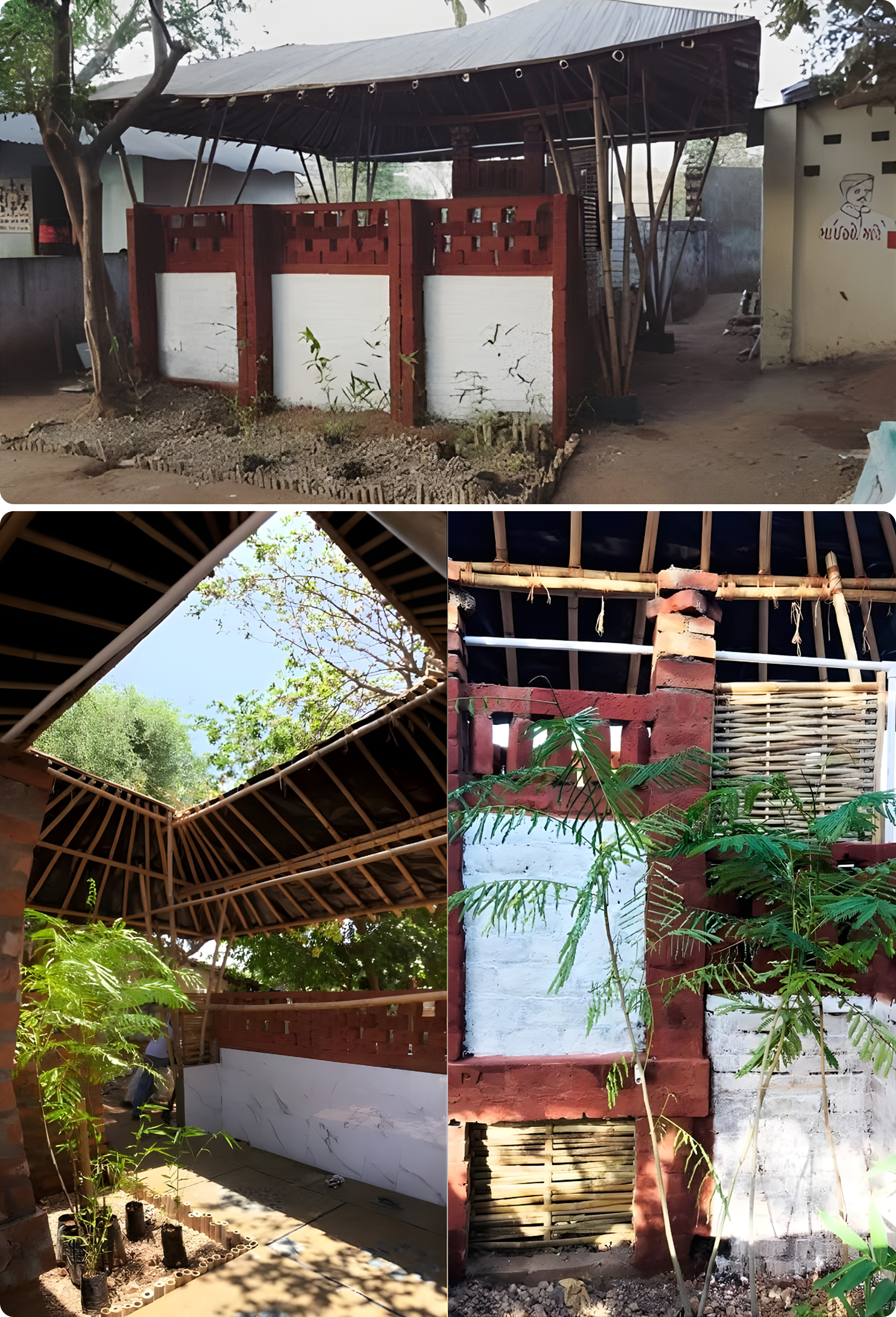
Final Outcome
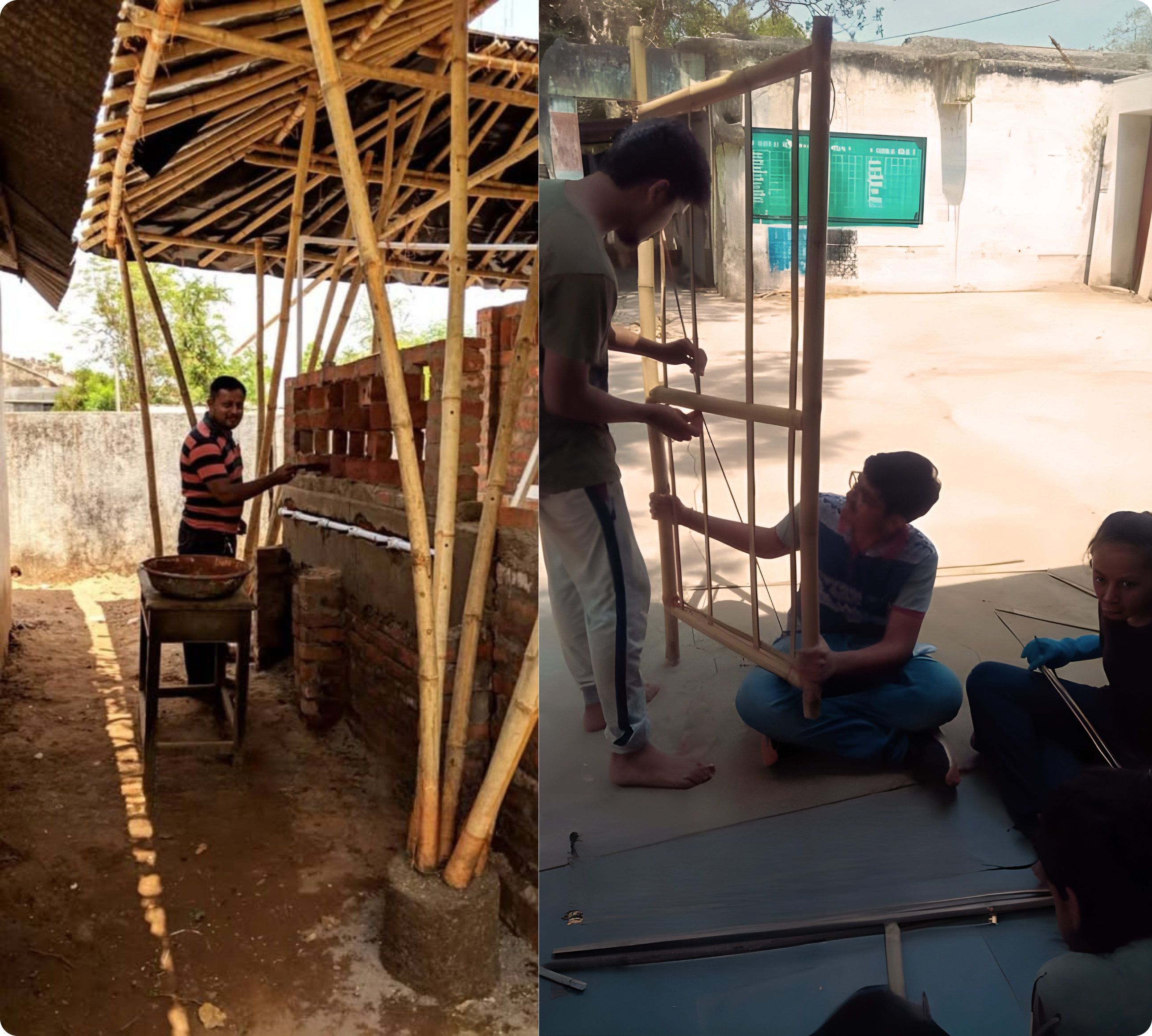
Site Execution
The workshop combined participatory design, material sensitivity, and hands-on construction with local builders and students. Emphasis was on durable, low-tech solutions that respond to local resources and maintenance capacities. The project produced built infrastructure, documented construction sequences, and a teaching module that amplifies skill transfer and created a replicable community-built model.
The design prioritized simplicity, durability, and environmental performance. Material choices and construction details were informed by local availability, climate response, and ease of maintenance, ensuring the solution remained both sustainable and practical.

Passive ventilation, water efficiency, and modular construction formed the core design elements, supporting hygiene, longevity, and ecological responsibility.
This two-week summer school focused on designing and constructing an eco-san toilet for a rural kindergarten. Working with students and local builders, the project emphasized hands-on learning, sustainable construction, and socially responsible design.

The workshop bridged design thinking and on-site making, translating ecological principles into a functional, community-oriented sanitation solution.
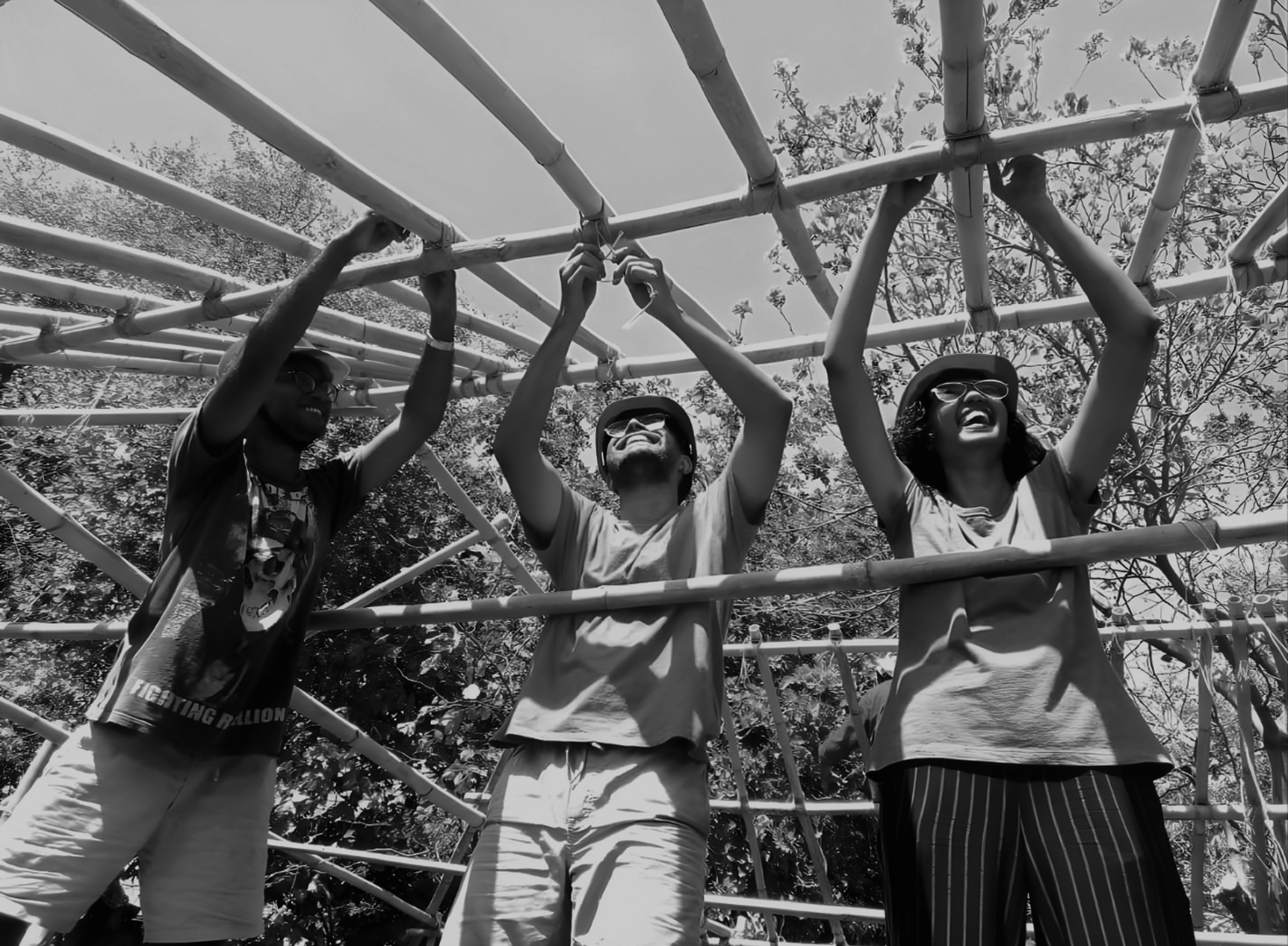
Site execution involved collaborative construction with local craftsmen, translating drawings into real-time decisions on site. The process encouraged adaptability, skill-sharing, and an understanding of construction constraints.

Hands-on building reinforced material knowledge, construction sequencing, and the value of collective effort in delivering sustainable architecture at a human scale.