External Environment
Design Character Visualisation
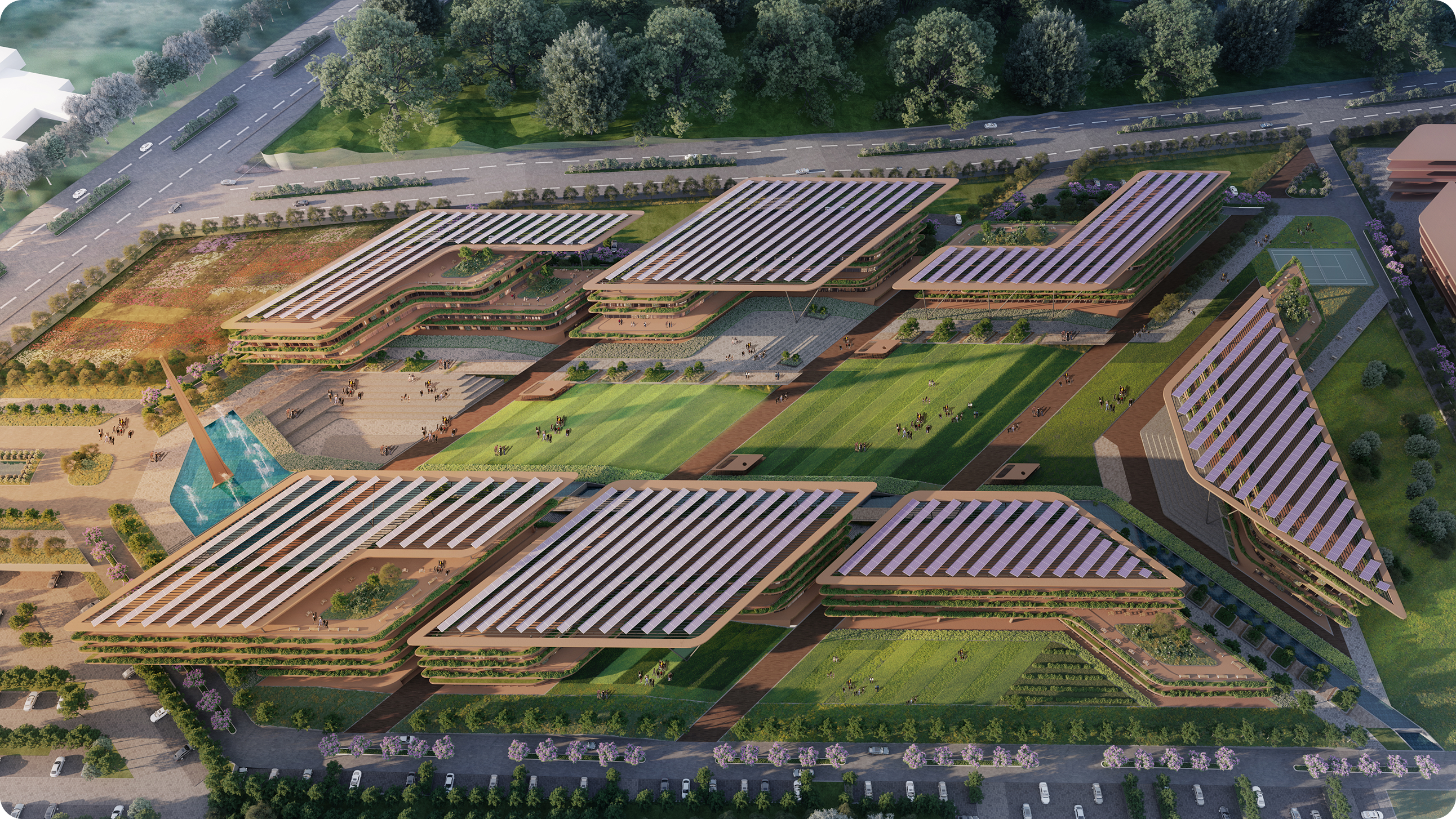
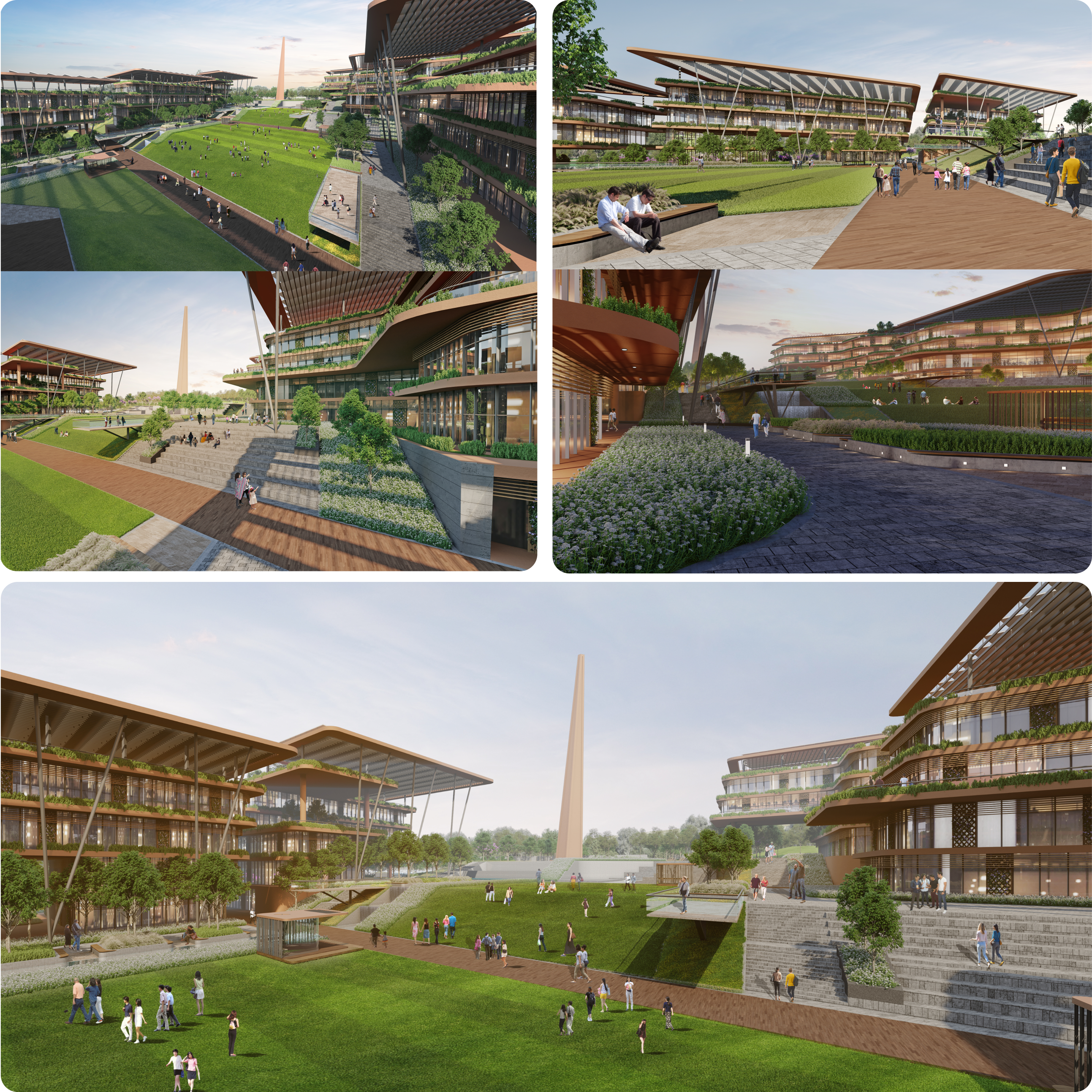
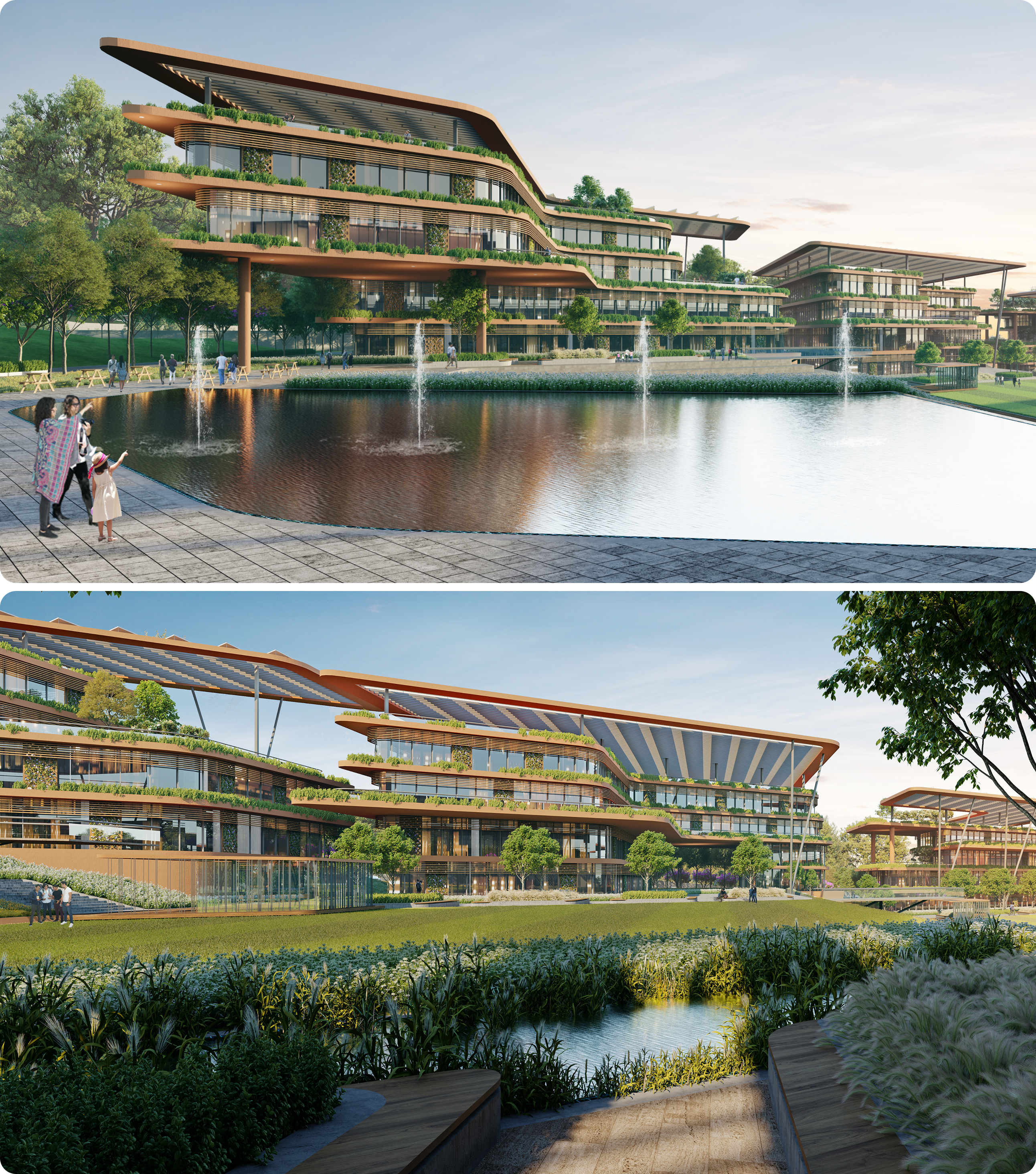
Built forms are organized to respond to landscape, water bodies, and pedestrian movement, creating a cohesive spatial experience. The external environment enhances comfort and usability through shaded public realms, green buffers, and visual permeability. High-quality 3D modelling and rendering translate these intentions into immersive visuals, clearly communicating spatial hierarchy, materiality, and the overall architectural identity.
The master planning establishes a coherent spatial framework that balances built massing, landscape, and movement networks. It organizes the campus around water bodies and green spines, ensuring visual continuity, climatic responsiveness, and a legible hierarchy of public and semi-public spaces.

The master plan structures the campus through clear zoning, landscape integration, and pedestrian-oriented circulation, creating a cohesive and adaptable framework for long-term institutional growth.
The external environment is shaped through layered landscapes, water elements, and shaded public realms that soften the built form. These spaces enhance microclimate performance while encouraging social interaction, visual openness, and seamless transitions between architecture and nature.

The external environment integrates water, vegetation, and walkable edges to improve comfort, activate public spaces, and strengthen the relationship between buildings and the surrounding landscape.
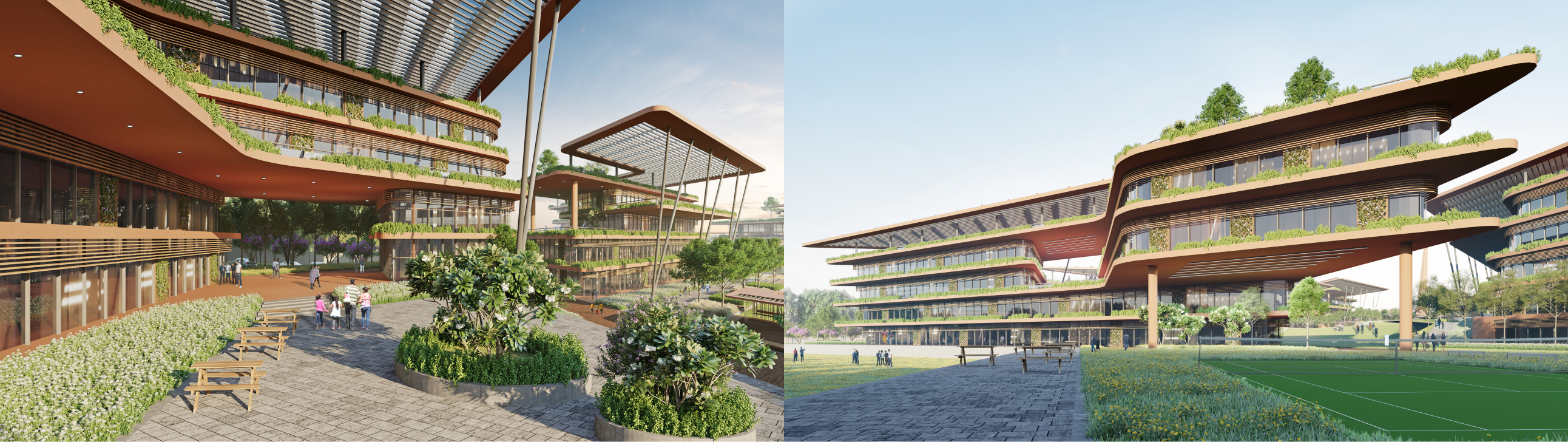
Design character visualisation translates the architectural intent into immersive spatial narratives through detailed 3D modelling and digital rendering. The visual language highlights materiality, façade articulation, and landscape integration, supporting a unified identity aligned with the project’s vision.

The visualisation communicates design intent through realistic rendering, emphasizing form, material, and landscape integration to establish a consistent and recognisable architectural character.